Tag: MS SQL Server Error Codes
SQL Server Error Code – 14519 only one of @login_name, @fixed_server_r

In this blog post, you’ll learn more about the SQL Server Error Code 14519 and the error message description that is shown SQL Server Error Code 14519 SQL Server Error Description for the Code :14519 Only one of @login_name, @fixed_server_role, or @msdb_role should be specified.
SQL Server Error Code – 20545 default agent profile
In this blog post, you’ll learn more about the SQL Server Error Code 20545 and the error message description that is shown SQL Server Error Code 20545 SQL Server Error Description for the Code :20545 Default agent profile
SQL Server Error Code – 41935 managed instance has reached the total c
In this blog post, you’ll learn more about the SQL Server Error Code 41935 and the error message description that is shown SQL Server Error Code 41935 SQL Server Error Description for the Code :41935 Managed Instance has reached the total capacity of underlying Azure storage account. Azure Premium Storage account is limited to 35TB of allocated space.
SQL Server Error Code – 10063 could not convert the data value due to
In this blog post, you’ll learn more about the SQL Server Error Code 10063 and the error message description that is shown SQL Server Error Code 10063 SQL Server Error Description for the Code :10063 Could not convert the data value due to reasons other than sign mismatch or overflow.
SQL Server Error Code – 13964 the two aliases ‘%.*s’ and ‘%.*s’ refer
In this blog post, you’ll learn more about the SQL Server Error Code 13964 and the error message description that is shown SQL Server Error Code 13964 SQL Server Error Description for the Code :13964 The two aliases ‘%.*s’ and ‘%.*s’ refer to different underlying objects in a LAST_NODE equality expression.
SQL Server Error Code – 652 the index ?%.*ls? for table ?%.*ls? (row
In this blog post, you’ll learn more about the SQL Server Error Code 652 and the error message description that is shown SQL Server Error Code 652 SQL Server Error Description for the Code :652 The index ?%.*ls? for table ?%.*ls? (RowsetId %I64d) resides on a read-only filegroup (?%.*ls?), which cannot be modified.
SQL Server Error Code – 2522 unable to process index %.*ls of table %
In this blog post, you’ll learn more about the SQL Server Error Code 2522 and the error message description that is shown SQL Server Error Code 2522 SQL Server Error Description for the Code :2522 Unable to process index %.*ls of table %.*ls because filegroup %.*ls is invalid.
SQL Server Error Code – 14827 unable to access remote data archive: er
In this blog post, you’ll learn more about the SQL Server Error Code 14827 and the error message description that is shown SQL Server Error Code 14827 SQL Server Error Description for the Code :14827 Unable to access remote data archive: Error: %d, Severity: %d, State: %d, Line: %d ‘%s’
SQL Server Error Code – 15380 failed to configure user instance on sta
In this blog post, you’ll learn more about the SQL Server Error Code 15380 and the error message description that is shown SQL Server Error Code 15380 SQL Server Error Description for the Code :15380 Failed to configure user instance on startup. Error configuring system database paths in MASTER DB.
SQL Server Error Code – 21860 table ‘%s’ in database ‘%s’ is subscribi
In this blog post, you’ll learn more about the SQL Server Error Code 21860 and the error message description that is shown SQL Server Error Code 21860 SQL Server Error Description for the Code :21860 Table ‘%s’ in database ‘%s’ is subscribing to transactional queued publication and published for merge for uploading changes, this may cause non-convergence between transactional publisher and subscriber.
SQL Server Error Code – 13553 system versioned temporal table ‘%.*ls’
In this blog post, you’ll learn more about the SQL Server Error Code 13553 and the error message description that is shown SQL Server Error Code 13553 SQL Server Error Description for the Code :13553 System versioned temporal table ‘%.*ls’ must have primary key defined.
SQL Server Error Code – 13943 the final recursive quantifier must be g
In this blog post, you’ll learn more about the SQL Server Error Code 13943 and the error message description that is shown SQL Server Error Code 13943 SQL Server Error Description for the Code :13943 The final recursive quantifier must be greater than the initial recursive quantifier.
Recent Stories
-
AI Reliability Architecture (ReAct, Guardrails, HITL) youtube.com
-

The Future of Software Architecture: Role of an Architect in... youtube.com
-

Stop using Event-Driven Architecture for your CRUD apps youtube.com
-
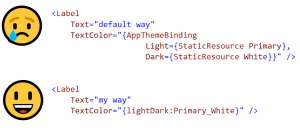
Improve .NET MAUI’s AppThemeBinding? (Matt Lacey) mrlacey.com
-
How to Create 80+ WPF Chart Types (Greg Lutz) developer.mescius.com